advertise
Blog / Permits & Regulations: A Homeowner's Handbook

Deck Building Regulations

Permits & Regulations in Nanaimo : A Homeowner's Handbook

One of the most common questions we get during initial consultations is: 'Do I really need a permit for this?' It's a valid question. Nobody likes paperwork, waiting periods, or extra fees. However, building codes exist to ensure safety, and in Nanaimo, the rules are strictly enforced for good reason.

The Golden Rule: 600mm (24 inches)

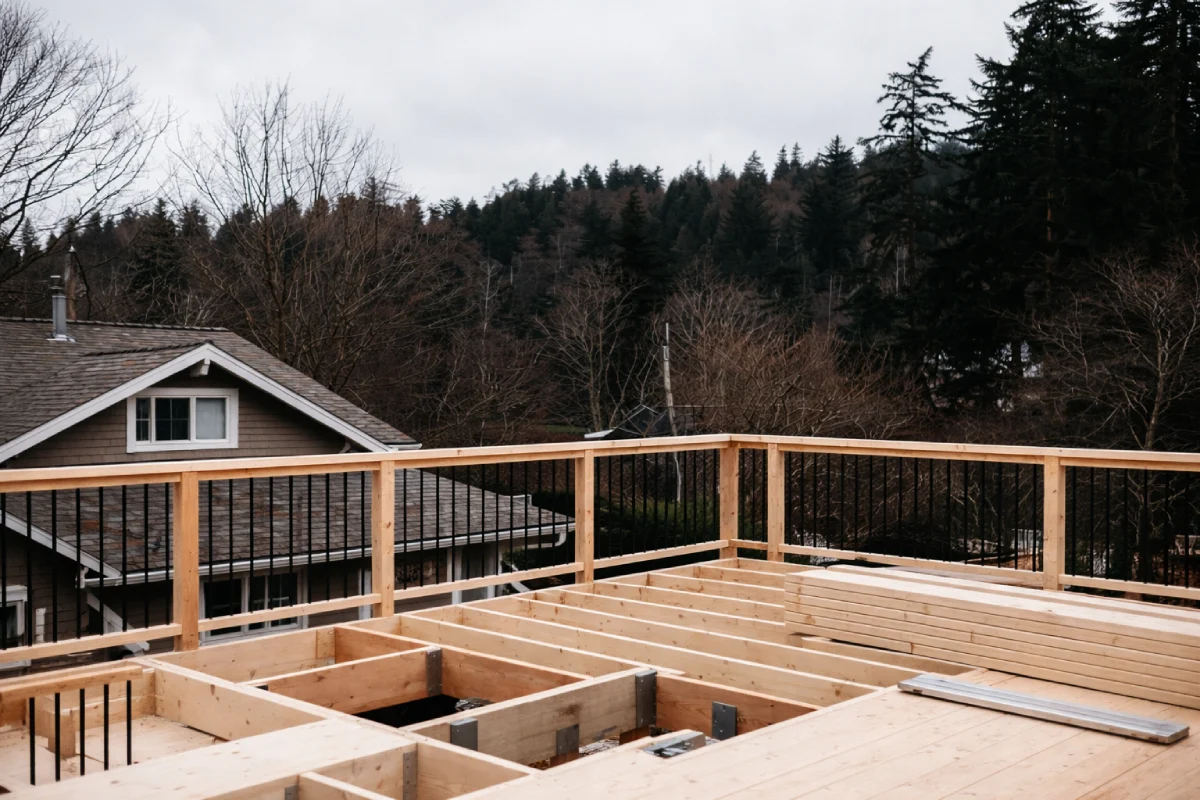
In the City of Nanaimo and the Regional District of Nanaimo (RDN), the primary trigger for a building permit is height. If your deck is more than 600mm (approximately 2 feet) above the finished ground level at any point, a building permit is mandatory. This isn't arbitrary—it's based on fall risk.
icon
icon

Why 24 inches?

At this height, a fall can cause serious injury. The code ensures that railings are strictly engineered (resisting 200lbs of lateral force), that stairs have correct run/rise ratios, and that the structure won't collapse under load.

Other Permit Triggers

Even if your building a deck on the ground, you might still need a permit if:
icon
icon
The deck is attached to the house (regardless of height). Attaching a ledger board impacts your home's building envelope, creating a risk for water intrusion if not flashed correctly.
icon
icon
The deck supports a roof structure (like a pergola or covered patio). Roofs add snow load and wind uplift forces that require engineered footings.
icon
icon
The deck exceeds a certain square footage (varies by zone).
icon
icon
You are adding plumbing or electrical services to the deck.

Skip the Red Tape—Build Your Dream Deck the Right Way

Don't let building permits and Nanaimo zoning bylaws stall your outdoor project. At Nanaimo Deck Pros, we handle everything from site surveys and architectural drafting to the final inspection. Build with confidence knowing your investment is 100% compliant and built to last.

Zoning: Setbacks and Lot Coverage

Before you even think about the structure, you have to think about placement. Every property has 'setbacks'—invisible lines from your property boundaries where you cannot build. In Nanaimo, side yard setbacks are often 1.5m to 3m, and rear yard setbacks can be 7.5m. Building a deck into a setback is usually the number 1 reason that  homeowners are forced to tear down unpermitted work.

The Risks of Building Unpermitted

We've seen it happen too many times: a homeowner builds a beautiful deck without a deck building permit to 'save time.' Years later, they try to sell their house. The home inspector flags the deck.
The city has no record of it. Now, the sale is stalled. The city can issue a 'Stop Work' order or compel you to tear down the structure if it doesn't meet setbacks or code requirements. Furthermore, if someone is injured on an unpermitted deck (e.g., a railing failure during a party), your home insurance provider may deny the liability claim, leaving you personally responsible.

The Application Process Explained

Securing a deck building permit isn't impossible, but it is detailed. Here is the typical workflow we handle for our clients:
icon
icon
1. Site Survey: Locating property pins to ensure strict setback compliance.
icon
icon
2. Drafting: Creating scaled architectural drawings of the framing plan, cross-sections, footings, and elevations.
icon
icon
3. Submission: Paying the application fee ($100-$300 typically) and submitting the package to City Hall.
icon
icon
4. Review: Waiting 4-6 weeks for the plan checker to approve. They may ask for engineering schedules if glass railings or unusual spans are involved.
icon
icon
5. Issuance: Paying the final permit fee based on project value.
icon
icon
6. Inspections: Footing inspection (before pouring concrete), Framing inspection (before decking is laid), and Final inspection.

Professional blueprints are essential for a smooth permit approval.
icon
icon
icon

We Handle It All

At Nanaimo Deck Pros, our quotes include the entire permit management process. We draft the plans, deal with the city inspectors, and ensure everything is 100% compliant, so you can sleep soundly knowing your investment is secure.