advertise
Blog / The Ultimate Guide to Composite Decking: Is It Worth the Investment?

Materials

The Ultimate Guide to Composite Decking in Nanaimo : Is It Worth the Investment?

For decades, Western Red Cedar was the undisputed king of decks on Vancouver Island. Its natural resistance to rot, intoxicating scent, and stunning grain made it the default choice for homeowners from Victoria to Campbell River. But in recent years, a significant shift has occurred. Drive through any new subdivision in Nanaimo, and you'll spot the clean lines and uniform colors of composite decking. Is this just a passing trend, or a superior technology here to stay?

What Actually Is Composite?

Composite decking is a high-performance, man-made building product that typically includes an approximate mix of 50% recycled wood fibers and 50% recycled plastic (often from grocery bags and milk jugs). The result is a board that looks like wood but performs like plastic. The wood fibers provide strength, stiffness, and a natural feel, while the plastic protects the wood from moisture degradation and insect damage.
Early generations of composite (from the 90s and early 2000s) had issues with fading, staining, and crumbling. However, modern 'capped' composite boards feature a high-performance polymer shell that wraps around the board on three or four sides, effectively sealing the core from the elements.
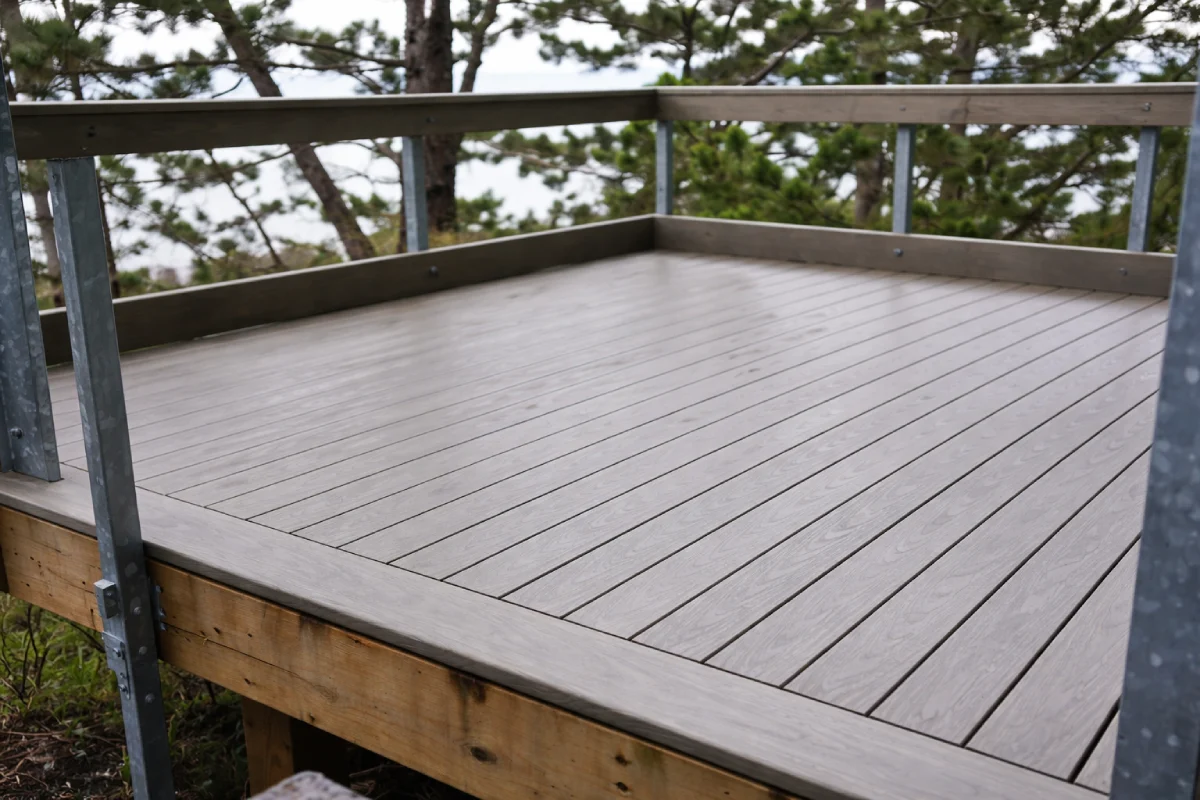
Modern composite decking in a coastal grey tone, showing zero signs of weathering after 5 years.
icon
icon

The Battle Against the Elements

Nanaimo's climate is brutal on exterior wood structures. We experience long, wet winters that encourage moss, algae, and rot, followed by increasingly hot, dry summers that cause wood to dry out, crack, check, and splinter. Furthermore, salt air from the ocean accelerates corrosion of fasteners and degrades surface stains rapidly.
"Composite decking isn't just about aesthetics; it's an engineering solution designed specifically to solve the moisture problems of the Pacific Northwest."
Because capped composite boards are impervious to water absorption, they don't rot, warp, crack, or splinter. For families with kids and pets, the 'no splinter' guarantee alone is often a major selling point. Unlike cedar, which greys out in 12-18 months if untreated, composite maintains its rich color for 25+ years with only minor, uniform fading occurring in the first few months as it settles.

Cost Analysis: Upfront vs. Long Term

This is the main sticking point for many homeowners. Composite materials typically cost 50-80% more than pressure-treated lumber and 20-30% more than mid-grade cedar upfront. However, the economics flip when you look at the 20-year cost of ownership.

Pressure Treated

Low upfront cost, but requires staining every 1-2 years ($300-$500/year DIY) and typically needs full board replacement in 10-12 years.

Cedar

Moderate upfront cost, requires annual soft washing and staining every 2-3 years ($500-$800/year pro maintenance). Lifespan is 15-20 years if well maintained.

Composite

High upfront cost, but near-zero maintenance costs. Wash with soap and water twice a year. Warranties often last 25-50 years.
When you factor in the cost of stain, cleaner, brushes, and—most importantly—your time, composite usually reaches the 'break-even' point with cedar around year 5 or 6. After that, you are saving money every single year.
icon
icon

The Verdict

If you plan to stay in your home for 5+ years, or if you simply hate the chore of sanding and staining, composite is the superior investment. It increases resale value, improves curb appeal, and gives you your summer weekends back.

Environmental Impact

Many eco-conscious clients are initially hesitant about using 'plastic' decking. However, composite is often the greener choice. Leading brands like Trex use up to 95% recycled content. A standard 500-square-foot composite deck can contain over 140,000 recycled plastic bags. By choosing composite, you are diverting millions of pounds of plastic film and reclaimed wood fibers from landfills annually, without cutting down a single new tree for your deck boards.